
Islands, remote coasts, and offshore installations run on shipped diesel and pay among the highest electricity prices in the world. Anacapa deploys there first. Each project banks revenue, operating hours, and the track record utility finance demands; the prize is a permanent slot in coastal grids.
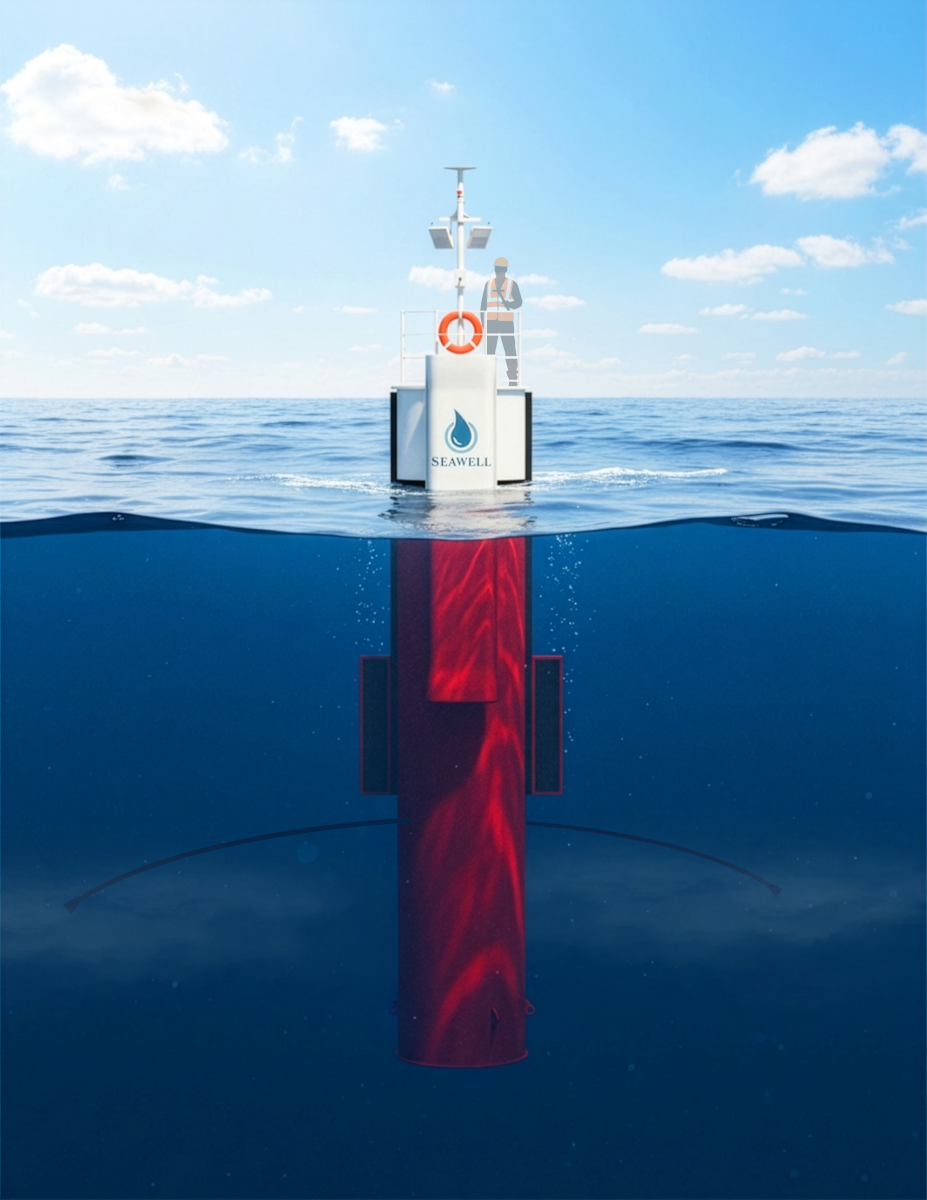
The communities paying the most for electricity are often short of fresh water too, and fresh water takes energy to make. The same deployment supplies both: wave power below the diesel price, fresh water beside it.
We co-deploy with SeaWell, our sister company developing the SW-15 modular offshore desalination buoy: 15 cubic meters of fresh water per hour from a single moored unit, scaling by adding units rather than rebuilding infrastructure.
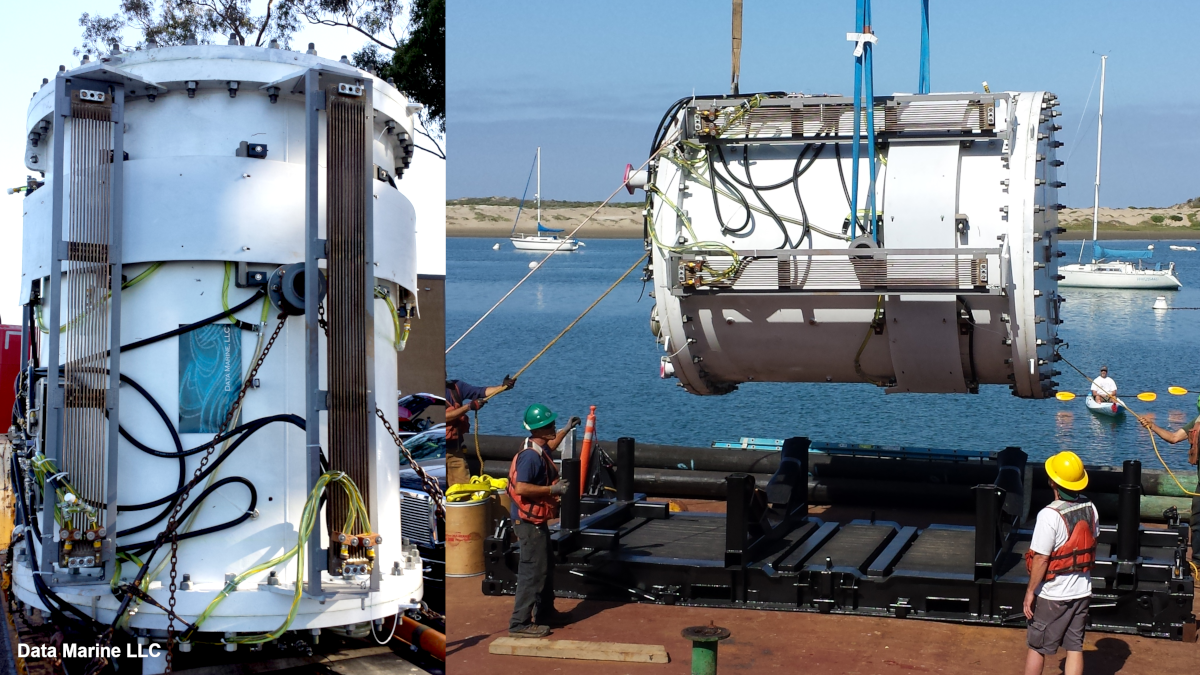
Subsea data centers are moving into commercial development, driven by AI compute growing faster than land sites can be cooled and powered. Underwater operation lowers cooling cost and improves hardware reliability.
Data Marine, our sister company, is commercializing subsea data vessels integrated with seawater cooling and modular power. The technology lineage traces to the team’s role in the first underwater data center prototype tested off the California coast in 2015.
Bridge markets, deploying now
Wind, oil and gas, and aquaculture platforms need local power that does not depend on platform infrastructure. The LumaNet co-locates to provide auxiliary power with minimal additional footprint.
Many populated coastlines and island nations still depend on imported diesel, with high cost and carbon intensity. Wave energy enables local generation from a resource already present at the coast.
The destination
The prize: utility generation along populated coasts. The LN12 scales into arrays, and wave’s predictability and winter strength complement wind and solar. Every bridge deployment banks the operating record that market demands.
Anacapa is in discussion with first-deployment partners in floating desalination, subsea data, and offshore platforms.