Ocean swells, the long waves left by distant storms, arrive continuously, on a forecast you can trust. We build the machine that turns them into clean power, the kind that shows up at night, in calm weather, in every season.
Independently reviewed by DNV. Modeling, testing, and assessment with NREL, Sandia, and PNNL, supported by the US Department of Energy.
Making clean power cheap is largely solved. Making it arrive at night, in calm weather, and in winter is not. Grids spent $66 billion on batteries in 2025 to fill that gap (IEA, World Energy Investment 2025), while the largest untapped resource for the job is the ocean, which is strongest in winter when grids need power most.
Swell propagates thousands of kilometers from the storms that made it, so generation carries on through the night and after local winds die down. Low-variability, high-persistence power.
Swell crosses the sea for days before it arrives, so generation, and the revenue behind it, can be forecast further ahead than wind or solar output.
The resource is concentrated where people already live. That shortens transmission and puts generation next to the load.
Wave machines kept breaking. They relied on hydraulics and gearboxes: untenable complexity at sea. The failures that followed bred funder skepticism, and the slot wave energy should hold in coastal grids stayed unclaimed.
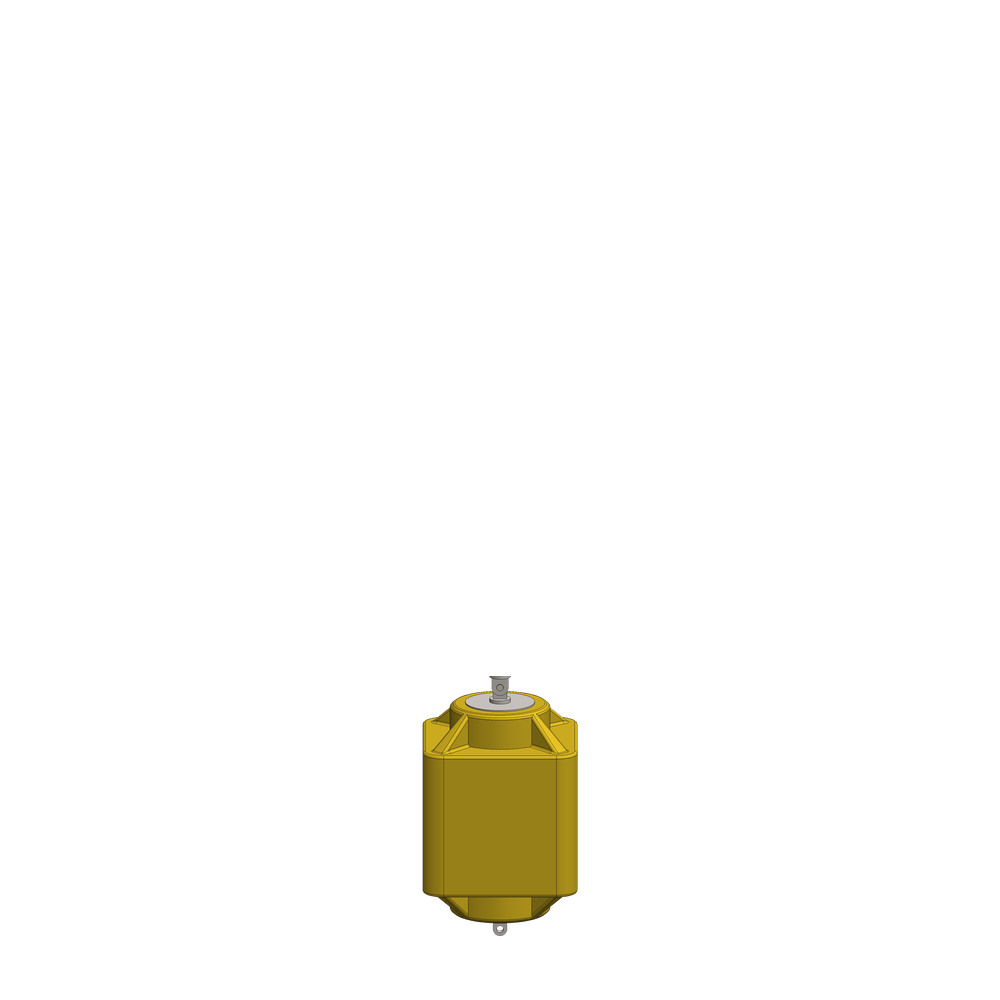
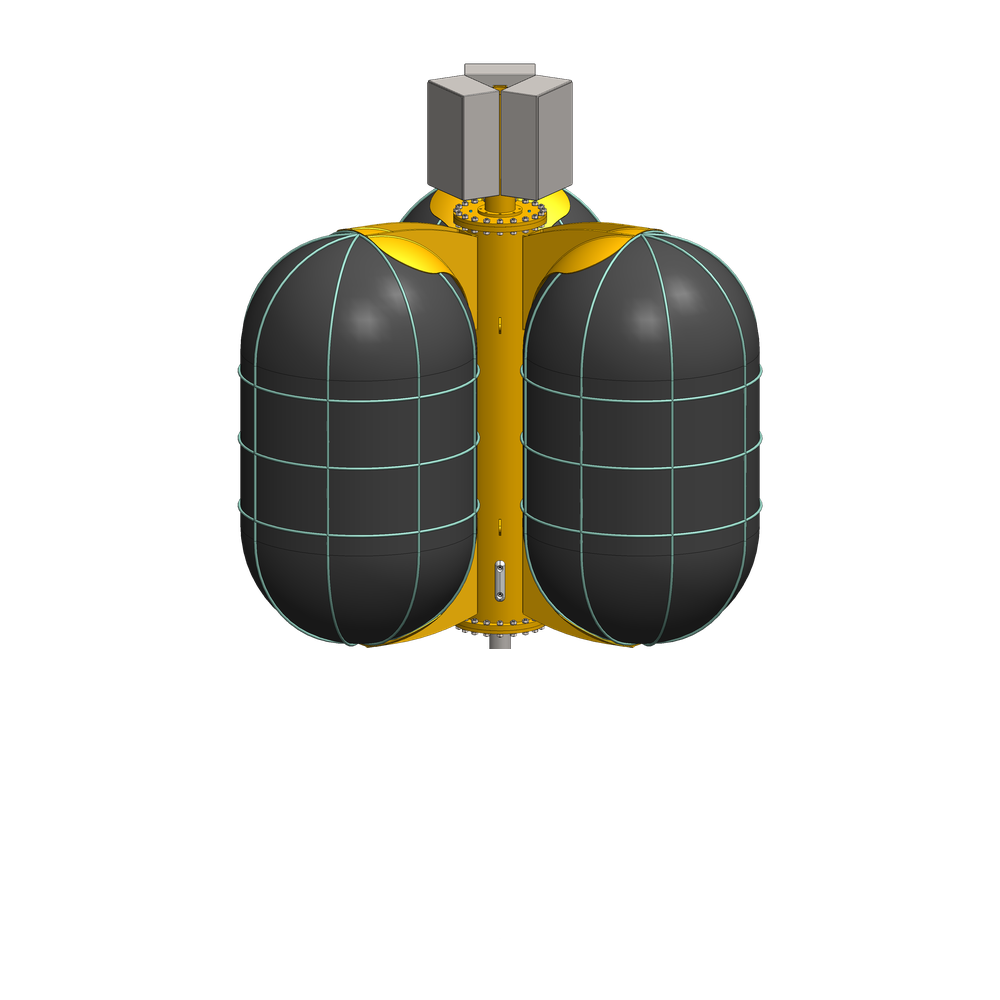
So we took them out. Waves drive our generator, the LUMA power take-off, directly: no gearbox, no hydraulics, and half the rare-earth content of a conventional direct-drive linear generator. Granted patents in the US and Europe cover it, and the same core module couples to the 4 m LN4 demonstrator and the 12 m LN12 commercial machine.
See how it works →Anacapa’s founders built Zond Systems and Clipper Windpower; their turbines brought GE and United Technologies into wind. Thirty years ago wind stood where wave energy stands now, and the companies that caught that moment became industrial giants.
Meet the team →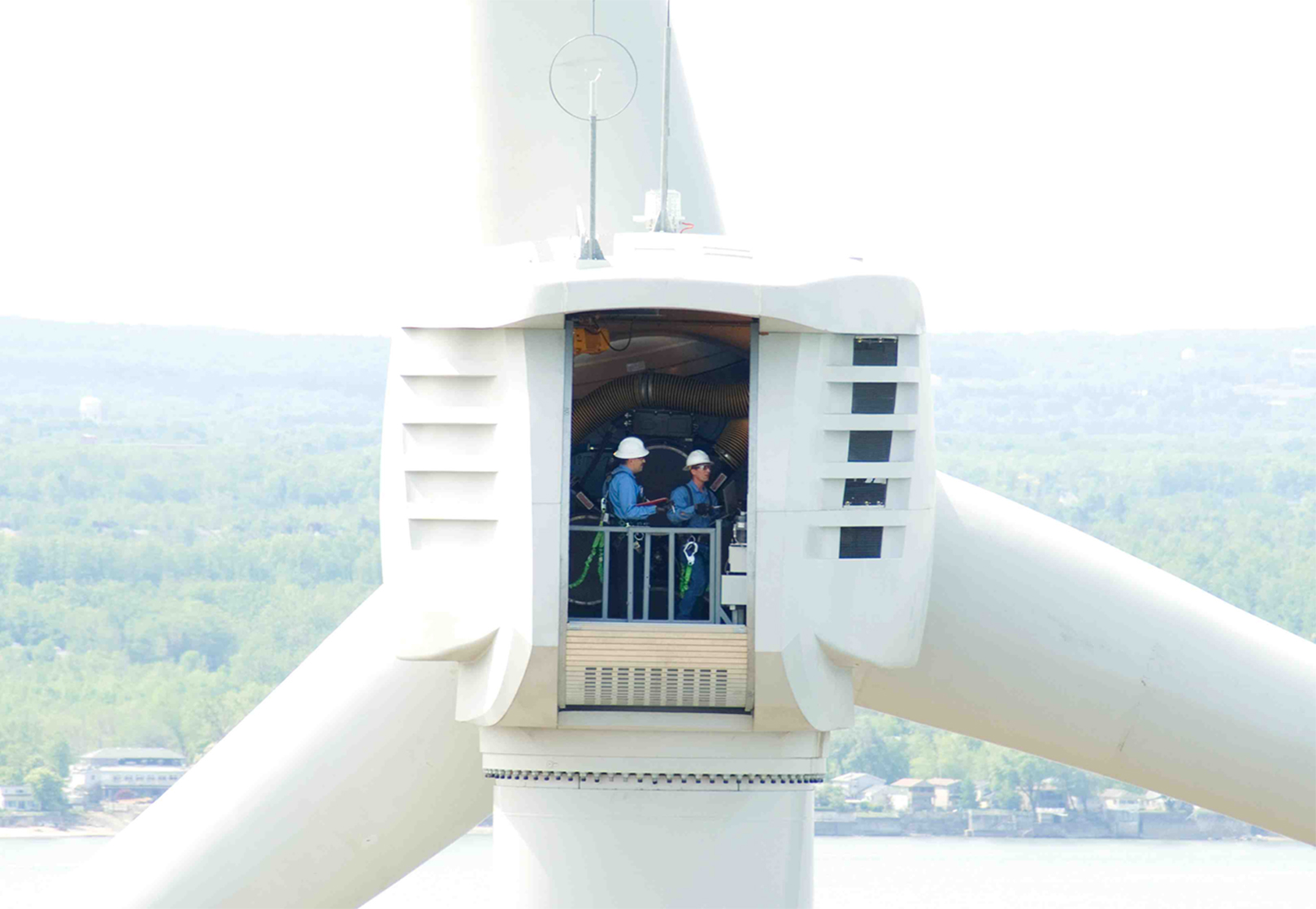
Islands and coastal communities running on shipped diesel pay among the highest electricity prices in the world. That is where Anacapa deploys first. These projects are the bridge, not the destination: each one banks revenue, operating hours, and the track record utility finance needs before it will fund arrays at grid scale.
Bridge markets, deploying now
Displacing imported diesel at the coast.
Powering SeaWell SW-15 offshore desalination buoys.
Powering Data Marine subsea data vessels.
Auxiliary power for wind, oil and gas, aquaculture.
The destination
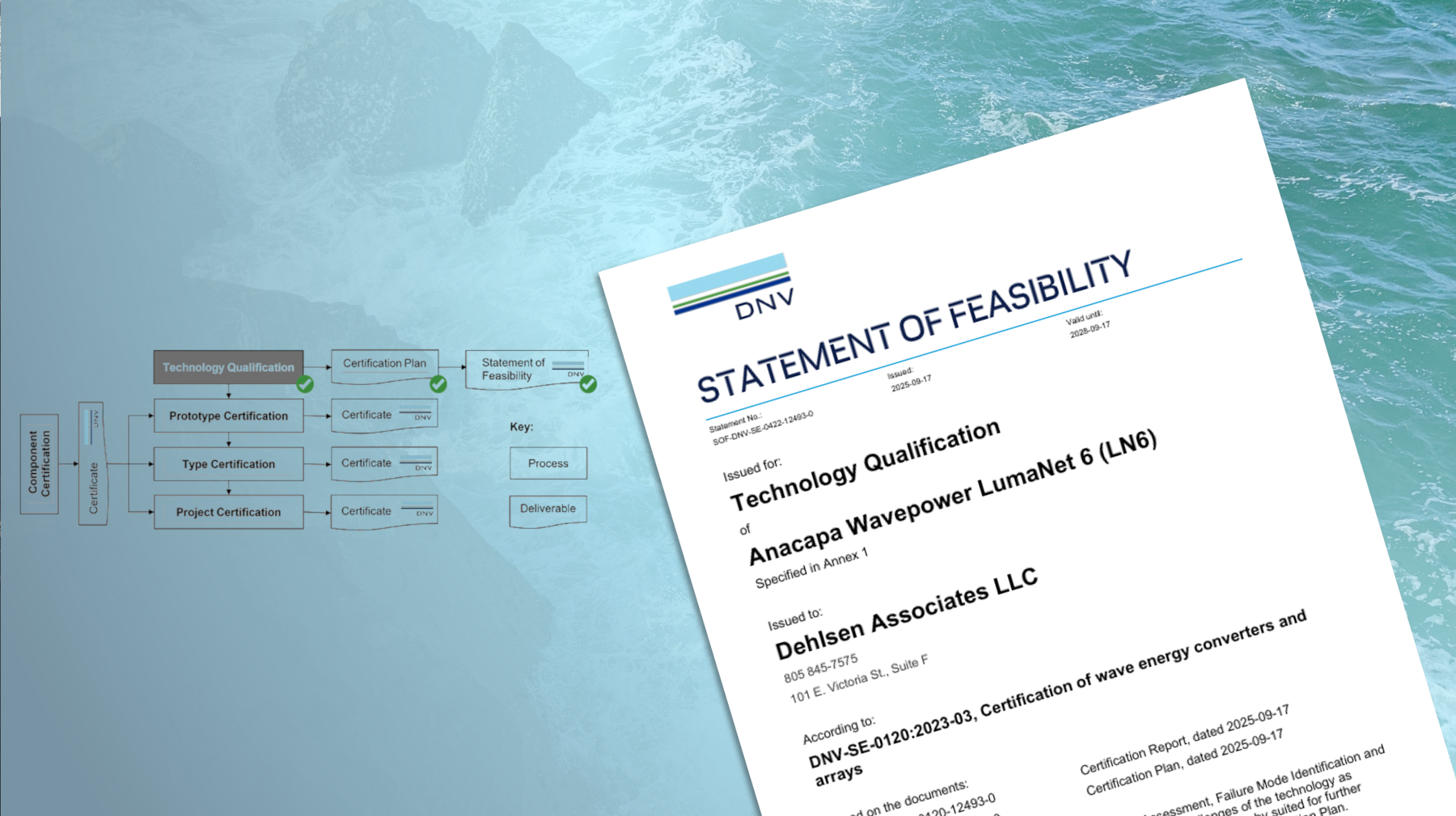
In December 2025, DNV issued a Statement of Feasibility for the technology under DNV-SE-0120. The certification scope now covers the LumaNet design: structure, simulation, load cases, mooring, and controls.
The LN4 demonstrator is in build now and targets in-water operation in the coming months. Its operational data feeds straight into the design of the LN12 commercial machine.
Read the announcement →We model annual energy output for your site by running its measured wave climate through each machine’s power matrix. Site-specific performance can be shared with partners and offtakers under discussion.
A marine renewable energy company developing LumaNet, a direct-drive wave energy converter. The LN4 subscale demonstrator targets in-water operation in the coming months, scaling to the LN12 commercial machine. Anacapa was founded by the leadership team behind Zond Systems and Clipper Windpower.
A surface-piercing buoy moves with passing waves relative to a submerged moored reference body. That motion drives a direct-drive linear generator, the LUMA power take-off, converting wave motion straight to electricity.
The LN4 demonstrator (4 m equivalent diameter) is in build now and targets in-water operation in the coming months. Its operational data feeds the design of the LN12 commercial machine.
Wave energy varies over hours rather than seconds, peaks in winter when demand does, and sits along the world’s most populated coastlines. Swell travels thousands of kilometers from distant weather, so generation continues at night and in calm local conditions.
The leadership team that built Zond Systems (1980-2000) and Clipper Windpower (2001-2010), the companies through which GE and United Technologies entered commercial wind, bringing a 30-year track record in large-scale rotating and linear machine design.
Deployment partnerships, offtake enquiries, or a closer look at the technology.